Undergraduate Program in
Civil Engineering
What is Civil Engineering?
Civil Engineering is a core branch of engineering that focuses on the planning, design, construction, and maintenance of infrastructure that supports modern society. This includes buildings, roads, bridges, dams, water supply systems, transportation networks, and environmental projects.
Civil engineers apply scientific principles, mathematics, and technology to create safe, sustainable, and efficient structures and systems. The field plays a vital role in improving quality of life by developing infrastructure that meets the needs of growing communities while ensuring environmental responsibility.
The discipline covers various specialized areas such as structural engineering, geotechnical engineering, transportation engineering, environmental engineering, and water resources engineering. Civil engineers are also involved in project management, site supervision, and ensuring that construction meets safety and regulatory standards.

Why Study Civil Engineering at NGPiTech
Civil Engineering at NGPiTECH is thoughtfully designed to equip students with essential 21st-century skills by addressing real-world and global challenges while building a strong foundation in core engineering principles. The program emphasizes fundamental knowledge through innovative pedagogy, incorporating interactive learning methods, project-based approaches, and problem-solving techniques that enhance conceptual clarity. Alongside academic excellence, students gain field-oriented skills through internships, industrial visits, and hands-on training, enabling them to connect theory with practical applications. Exposure to latest technologies is ensured through strategic Memorandums of Understanding (MoUs) with leading industries and organizations, providing opportunities for workshops, expert lectures, and certification programs. With a strong focus on sustainability and responsible engineering practices, the department nurtures students to contribute effectively toward achieving the Sustainable Development Goals (SDGs), ultimately shaping them into competent, innovative, and socially responsible civil engineers ready to build the future.
Foundation
Engineers
Collaborations
Field Training
Approach
SDGs

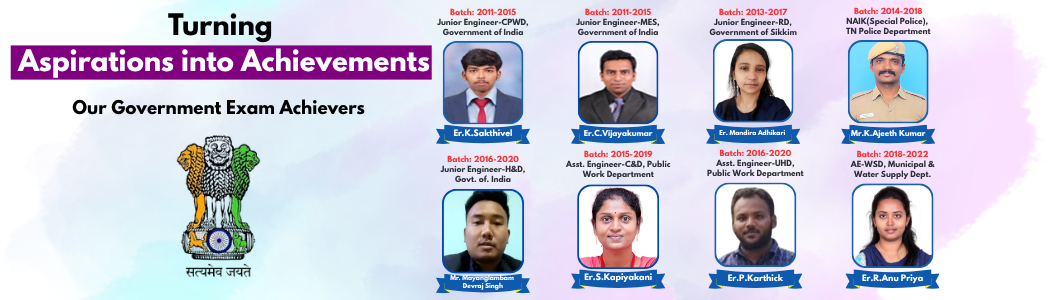
Being recognized as the Best Outgoing Student of the 2018–2022 batch from the Department of Civil Engineering at NGPiTech is an honor I deeply cherish. The department provided me with a strong academic foundation along with invaluable practical exposure. The constant support and mentorship from faculty motivated me to strive for excellence in every endeavor.”
Er. R. Anu Priya|Civil | 2018-2022
Assistant Engineer, Municipal & Water Supply Dept., Govt. of Tamil Nadu

Being a part of the Civil Engineering department at NGPiTech was a defining phase of my life. The department provided a perfect balance of theoretical knowledge and practical application. The faculty’s mentorship and industry-focused approach helped me develop strong technical skills.”
Dr. M. M. C. Rahul|Civil | 2011-2015
Environmental Officer, Gaurang Environmental Solutions Pvt. LTD (Chennai)

My journey at the Department of Civil Engineering, NGPiTech, laid the foundation for my career on an international platform. The strong academic curriculum and practical exposure prepared me to meet global engineering standards.”
Er. Ragendra Prasad|Civil | 2012-2016
Deputy Operational Team, Torbay and South Devon NHS Foundation Trust (England)

My experience at the Department of Civil Engineering, NGPiTech, has been truly transformative. The well-structured curriculum and practical exposure helped me build a strong technical foundation.”
D. Arunima|Civil | 2015-2019
Senior VDC Engineer, vConstruct Private Limited (Pune)
What you will study
- Civil engineering design
- Computational methods
- Energy and environmental engineering
- Fluid mechanics
- Geotechnical analysis
- Highway engineering and materials
- Site surveying
- Soil mechanics and engineering geology
- Structures, materials and dynamics
Department Information's
About Department
The Civil Engineering Department, established in 2011, has rapidly emerged as a recognized research center affiliated with Anna University. With a strong emphasis on excellence in education and research, the department aims to foster innovation, promote sustainable infrastructure development, and address contemporary challenges in the field of civil engineering.
Since its inception, the department has focused on providing high-quality education. It offers a comprehensive curriculum that blends theoretical knowledge with practical application, ensuring that students are well-equipped to tackle real-world engineering problems. The department has a team of highly qualified faculty members with expertise in various domains of civil engineering. In addition to its educational programs, the Civil Engineering Department is renowned for its research capabilities. As a recognized research center of Anna University, it undertakes cutting-edge research in various sub-disciplines of civil engineering. The department is dedicated to advancing knowledge in areas such as sustainable construction materials, smart infrastructure, water resources engineering, construction management and environmental engineering & management. Research outputs from the department contribute significantly to the development of innovative solutions that enhance the efficiency, safety, and sustainability of infrastructure systems.
The department is equipped with state-of-the-art laboratories and modern facilities that support both teaching and research activities. It collaborates with industry partners, governmental organizations, and academic institutions to ensure that its research is aligned with current industry needs and societal requirements. Through various research projects, conferences, and workshops, the department maintains strong ties with the broader engineering community, facilitating knowledge exchange and technological advancement.
The Civil Engineering Department stands as a pillar of academic excellence, cutting edge research, and professional development, making significant contributions to the field of civil engineering and the development of sustainable infrastructure.
Vision
To develop competent Civil Engineers with technical knowledge and skills to meet the industrial expectation and lead the society towards sustainability.
Mission
- ▸ MD1: Importing domain technical knowledge through dynamic and industrial curriculum.
- ▸ MD2: Inoculating state-of-art, academic environment, through innovative teaching learning practices.
- ▸ MD3: Collaborating with industry, society and professional bodies to provide solution to societal problem through research and development.
- ▸ MD4: Developing leaders with effective communication skills and ethical values to enhance their career.
Short Term Goals
- ▸ To enhance the quality of teaching–learning through modern methodologies and digital tools.
- ▸ To strengthen practical knowledge by upgrading laboratory facilities and equipment.
- ▸ To promote student participation in internships, industrial visits, and skill development programs.
- ▸ To improve placement opportunities by conducting training in technical and soft skills.
- ▸ To encourage students to learn advanced software such as AutoCAD, STAAD Pro, and GIS.
- ▸ To organize workshops, seminars, and guest lectures by industry experts.
- ▸ To motivate students to participate in technical competitions and research activities.
Long Term Goals
- ▸ To develop highly competent civil engineers capable of addressing real-world infrastructure challenges.
- ▸ To establish the department as a center of excellence in research and innovation.
- ▸ To promote sustainable and eco-friendly engineering practices.
- ▸ To strengthen collaboration with industries, research organizations, and government bodies.
- ▸ To produce socially responsible engineers contributing to nation-building.
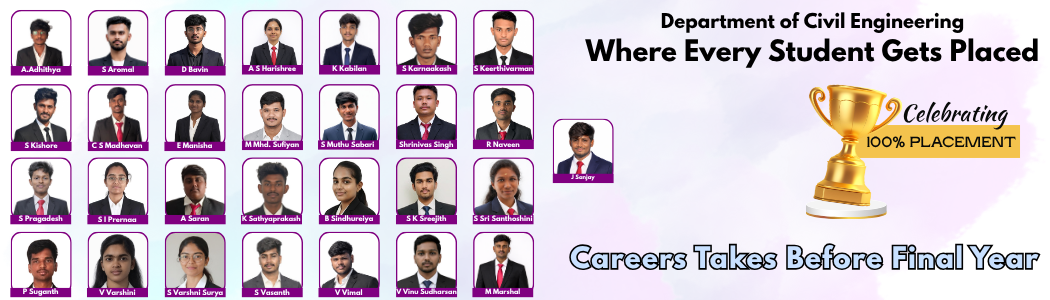
- ▸ To achieve consistent academic excellence and 100% placement.
State Program Educational Objectives (PEOs)
The graduates of Civil Engineering programme shall:
- ▸PEO1: Graduates will effectively demonstrate engineering knowledge, problem solving skill, design capabilities and entrepreneurial skills by providing practical solutions.
- ▸PEO2: Graduates will effectively demonstrate professionalism in multidisciplinary engineering environment, leadership quality, teamwork and engage in life- long learning.
- ▸PEO3: Graduates will demonstrate good commitment to the community and the profession through involvement with professional societies.
- ▸PEO4: Graduates will make contributions to knowledge and establish best engineering practice through research and development in an ethical way.
After successful completion of B.E.Civil Engineering degree programme, the students should be able to:
- ▸PO1: Engineering knowledge: Apply the knowledge of mathematics, science, engineering fundamentals, and an engineering specialization to the solution of complex engineering problems.
- ▸PO2: Problem analysis: Identify, formulate, review research literature, and analyze complex engineering problems reaching substantiated conclusions using first principles of mathematics, natural sciences, and engineering science.
- ▸PO3: Design/development of solutions: Design solutions for complex engineering problems and design system components or processes that meet the specified needs with appropriate consideration for the public health and safety, and the cultural, societal, and environmental consideration.
- ▸PO4: Conduct investigations of complex problems: Use research-based knowledge and research methods including design of experiments, analysis and interpretation of data, and synthesis of the information to provide valid conclusion.
- ▸PO5: Modern tool usage: Create, select, and apply appropriate techniques, resources, and modern engineering and IT tools including prediction and modeling to complex engineering activities with an understanding of the limitations.
- ▸PO6: The engineer and society: Apply reasoning informed by the contextual knowledge to assess societal, health, safety, legal and cultural issues and the consequent responsibilities relevant to the professional engineering practice.
- ▸PO7: Environment and sustainability: Understand the impact of the professional engineering solutions in societal and environmental contexts, and demonstrate the knowledge of, and need for sustainable development.
- ▸PO8: Ethics: Apply ethical principles and commit to professional ethics and responsibilities and norms of the engineering practice.
- ▸PO9: Individual and team work: Function effectively as an individual, and as a member or leader in diverse teams, and in multidisciplinary setting.
- ▸PO10: Communication: Communicate effectively on complex engineering activities with the engineering community and with society at large, such as, being able to comprehend and write effective reports and design documentation, make effective presentations, and give and receive clear instruction.
- ▸PO11: Project management and finance: Demonstrate knowledge and understanding of the engineering and management principles and apply these to one’s own work, as a member and leader in a team, to manage projects and in multidisciplinary environments.
- ▸PO12: Life-long learning: Recognize the need for, and have the preparation and ability to engage in independent and life-long learning in the broadest context of technological change.
PSO-Program Specific Outcomes
- ▸PSO1: Ability to solve complex Civil Engineering problems in Structural Engineering, Environmental Engineering, Water Resources Engineering and Geotechnical Engineering for various design applications.
- ▸PSO2: Apply the contextual knowledge of project management for effective and efficient resource handling, time and cost management and preparation of documentations with good presentation skills.
Faculty Details
Laboratories
Our department houses state-of-the-art laboratories equipped with the latest hardware and software to provide students with hands-on, practical engineering experience.
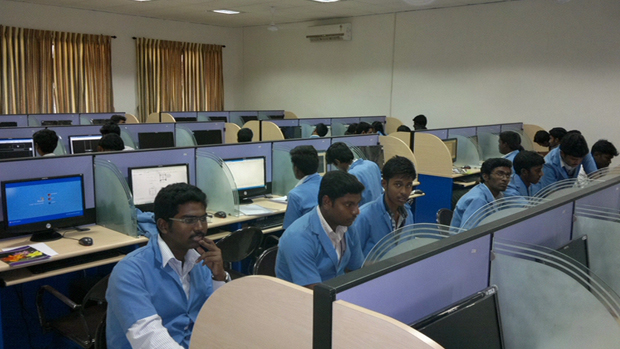
Computer Aided Building Drawing Laboratory
Equipped with advanced CAD software for building planning, modeling, and architectural drafting.
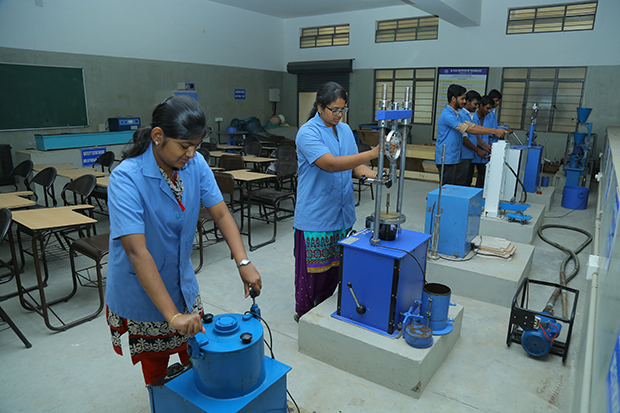
Concrete and Highway Engineering Laboratory
Facilities for testing properties of construction materials like cement, aggregates, and bitumen.
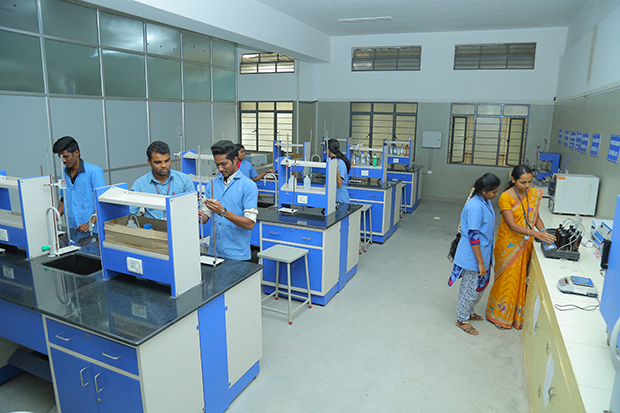
Environmental Engineering Laboratory
Advanced equipment for water and wastewater quality analysis and treatment processes.
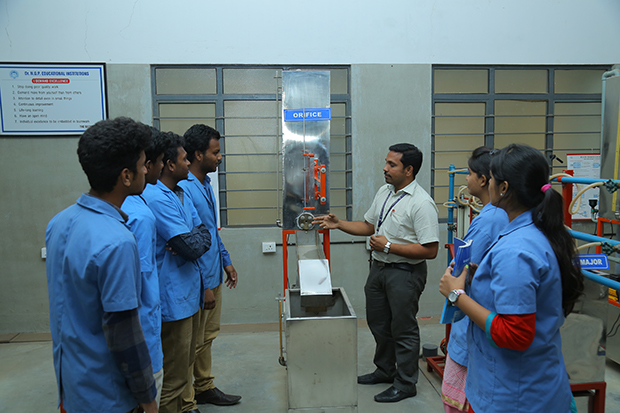
Hydraulic Engineering Laboratory
Includes setups for studying fluid mechanics, flow measurements, and hydraulic machinery.
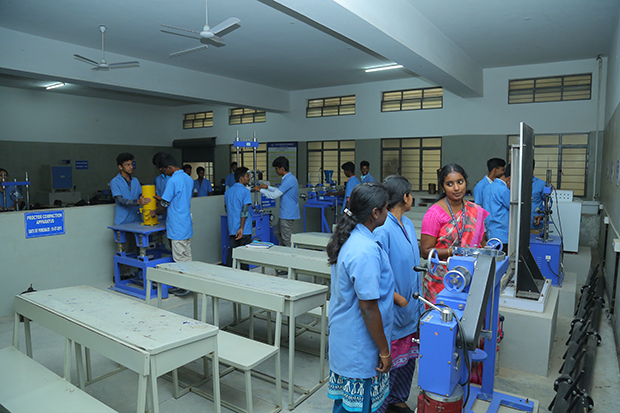
Soil Mechanics Laboratory
Testing facilities for assessing soil properties, bearing capacity, and geotechnical engineering.
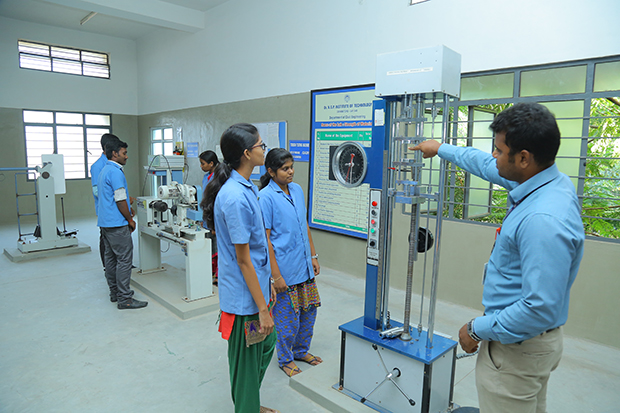
Strength of Materials Laboratory
Focuses on testing the mechanical properties of materials under tension, compression, and impact.
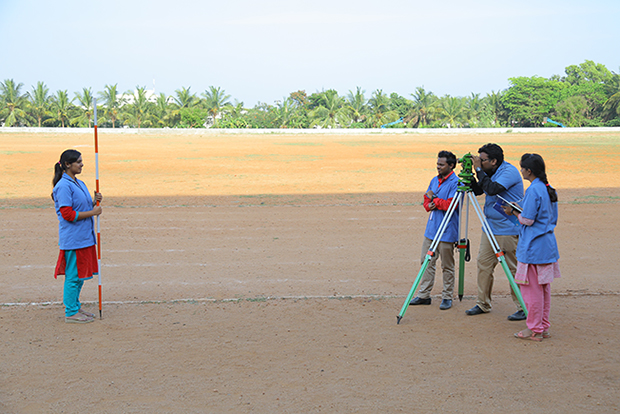
Survey Laboratory
Equipped with modern surveying instruments like total stations, theodolites, and GPS systems.
Industry Inside Campus
Nunnari Labs

Pinesphere Solutions Pvt.Ltd

Avenza Consulting Services

Inno Valley Works

Industry Partnerships





Professional Societies
Our department hosts active student chapters of prestigious national societies, providing a platform for networking, skill development, and professional growth.

Association of Consulting Civil Engineers (ACCE)
Dr. N.G.P. Institute of Technology has inaugurated the ACCE Student Chapter and Institute Membership in the year 2018. The main object of the association is to encourage and foster the ideals of the profession, to hold conferences/meetings/seminars for dissemination of knowledge amongst the civil engineers in particular and the society at large.

Builders’ Association of India
Dr. N.G.P. Institute of Technology has inaugurated the BAI Student Chapter and Institute Membership in the year 2017. The aims & objectives of the Builders’ Association of India Inter-alia area.
Indian Concerete Institute
Dr.N.G.P Institute of Technology has inaugurated the ICI student chapter and institute membership in the year 2013. Indian Concrete Institute (ICI) is one of the leading professional bodies in India.
Indian Geotechnical Society
Dr. N.G.P. Institute of Technology has inaugurated the IGS Student Chapter and Institute Membership in the year 2018. The Indian Geotechnical Society (IGS) aims at promoting co-operation amongst engineers and scientists.
Indian Green Building Council
Dr. N.G.P. Institute of Technology has inaugurated the IGBC Student Chapter and Institute Membership in the year 2019. The objective of IGBC is to facilitate a holistic approach to create environment friendly buildings.

Indian Plumbing Association
Dr.N.G.P. Institute of Technology has inaugurated the IPA Student Chapter and Institute Membership in the year 2019.
Indian Society for Technical Education
The major objectives of the ISTE are: Providing quality training programmed to teachers and administrators of technical institutions to update their knowledge and skills in their fields of activity.

Indian Water Work Association
Dr.N.G.P. Institute of Technology has inaugurated the IWWA Student Chapter and Institute Membership in the year 2019. The Objective of IWWA is to stimulate and promote the development of Science in managing Water.
The Institution of Engineers (India)
Dr.N.G.P. Institute of Technology has inaugurated the IE(I) Student Chapter and Institute Membership in the year 2019. IEI has been playing a critical role in defining excellence.

Industry Projects
Students of Dr.N.G.P. Institute of Technology, Collaborate on real-world projects. We partner our students with leading corporate, community and government organisations to create innovative solutions to complex issues.
Preview Our Projects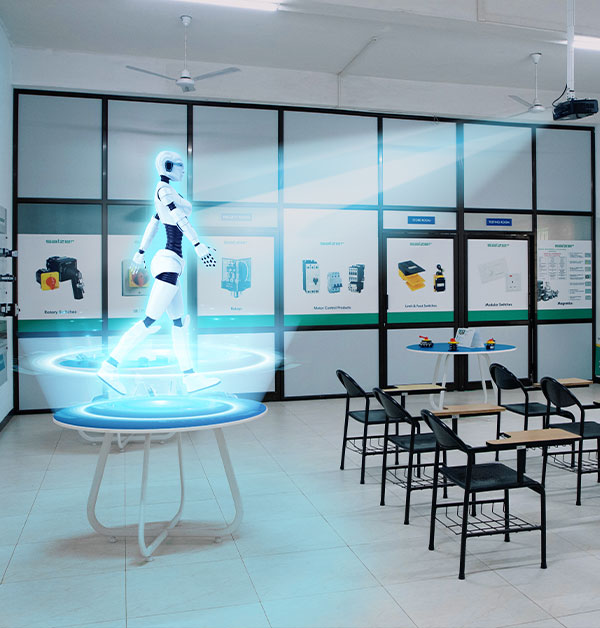
Learning Environment
Dr. NGP Institute of Technology is a multi-campus learning environment offering programs in different locations.

Hear from our Alumni
Listen to our alumni talk about their degree and life at Dr. NGP Institute of Technology, Coimbatore.
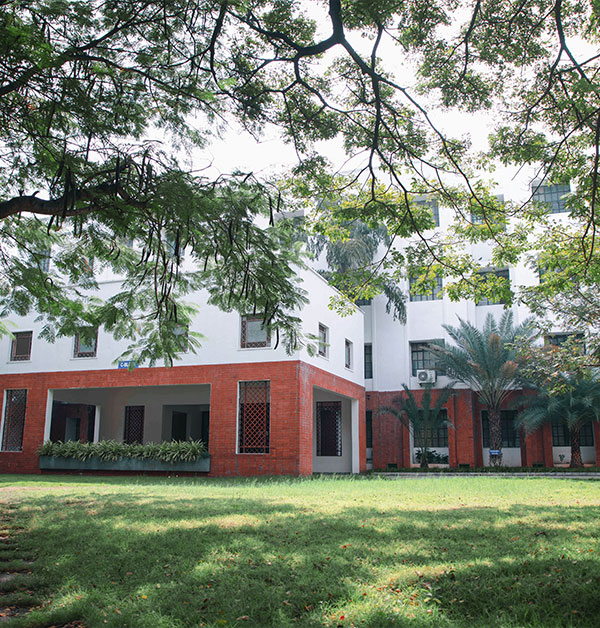
Campus life
Our campuses are a rich, vibrant and have lots of activity where there is always something going on. Find out what activities you can take part in NGPiTECH
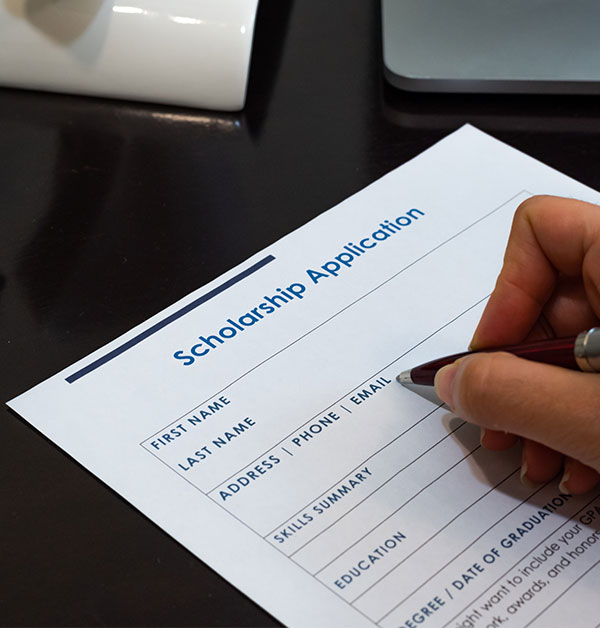
Scholarships
Find out the range of scholarships available when you study at Dr. N.G.P. Institute of Technology

Book a campus tour
Explore NGPiTECH campus by yourself. We offer walking tours and virtual tours online. You can explore Key locations, Laboratories, Learning Hubs, Sporting Areas and Hostel faciliteis.

Sporting Arena
We provide a range of sports facilities Inside the campus. World class Sporting facilites at NGPiTECH Helps student to pursue their dream Career in sports.

Industry Collaborations
With over 50+ industry tie-ups and partnerships learning is always collaborative and realtime at NGPiTECH